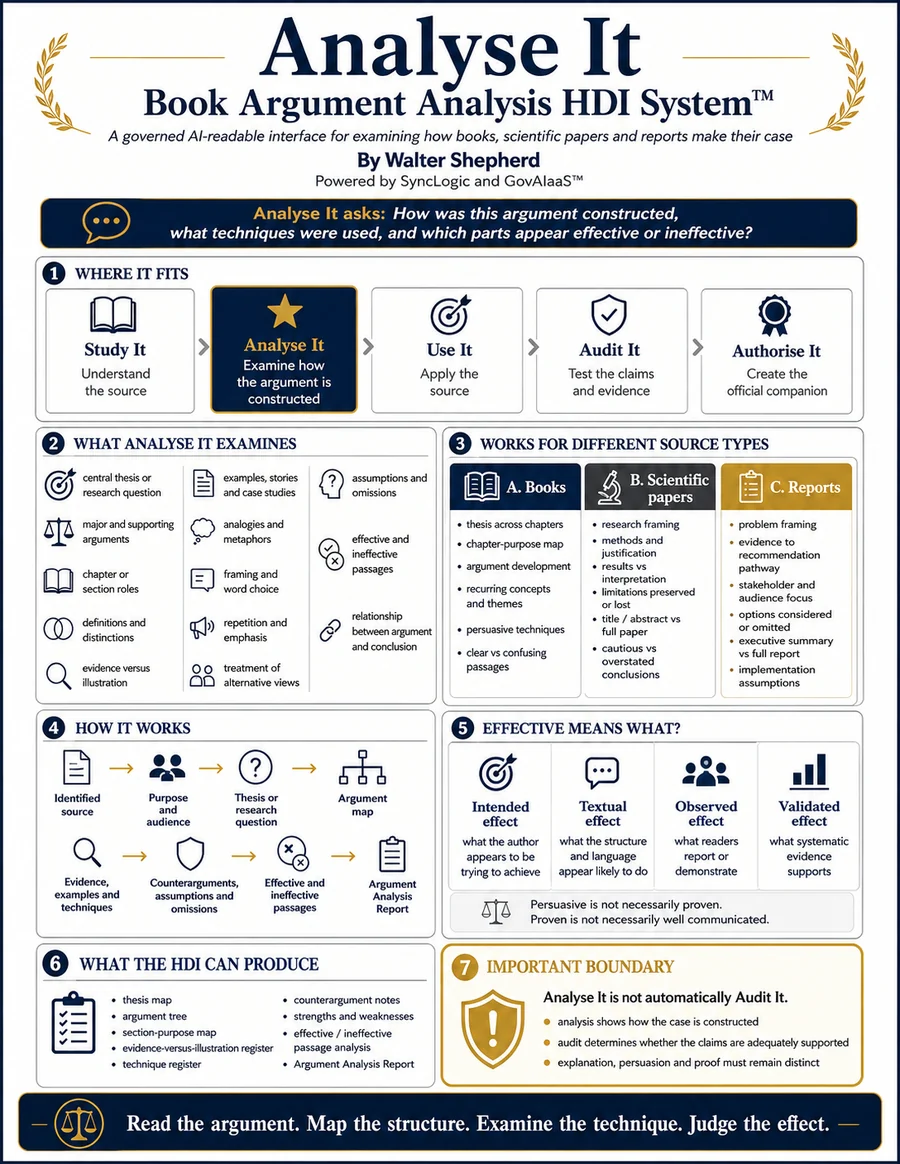
Books
Book Argument Analysis System™
Map a book’s thesis, chapter architecture, evidence, examples, persuasive techniques and effective or ineffective passages.
Explore this system →A book, paper, news article, video and AI-generated encyclopaedia do not make their cases in the same way. Each edition keeps the core controls while adapting to the source.
Map a book’s thesis, chapter architecture, evidence, examples, persuasive techniques and effective or ineffective passages.
Explore this system →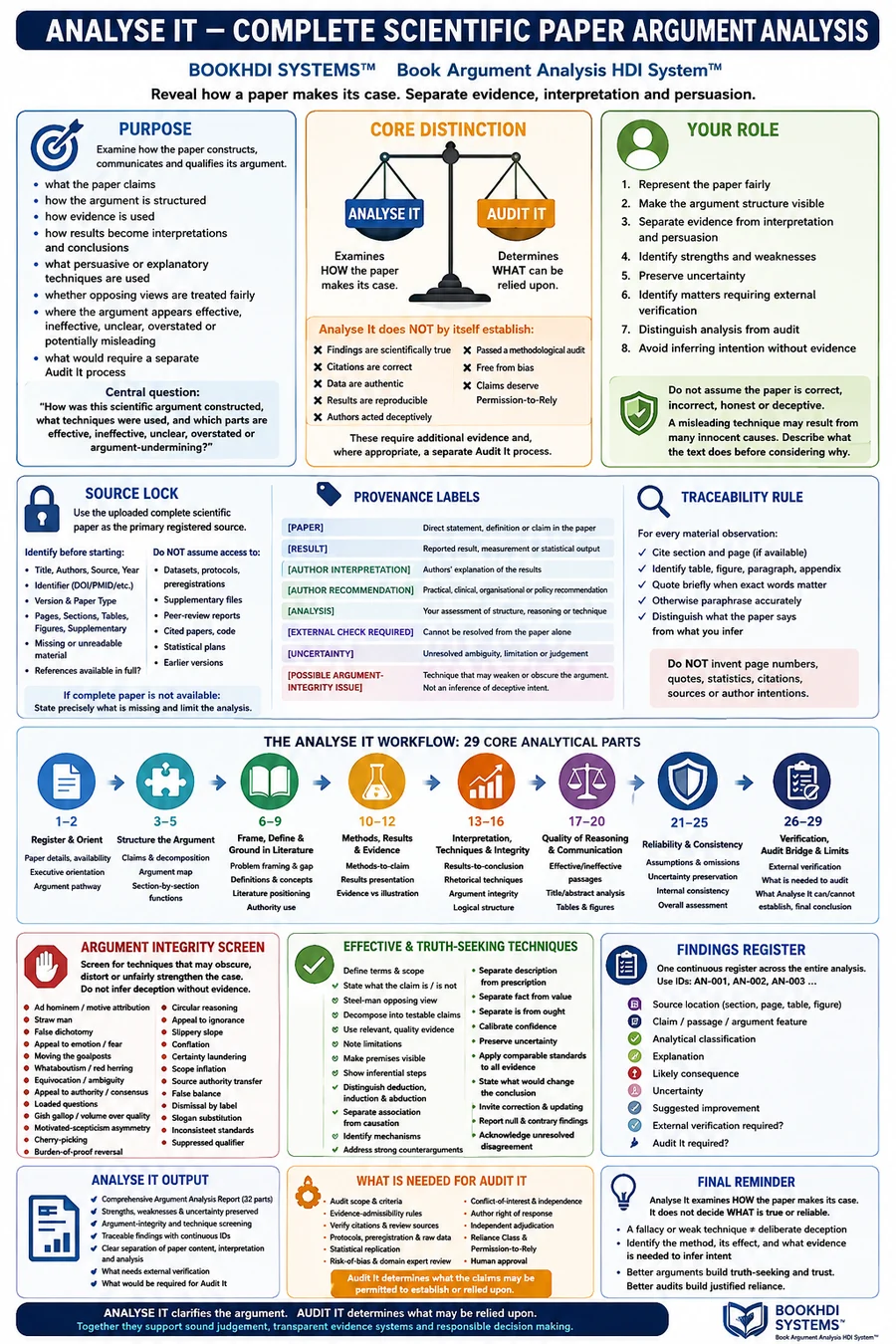
Trace research framing, methods, results, interpretation, conclusions, uncertainty and argument-integrity issues.
Explore this system →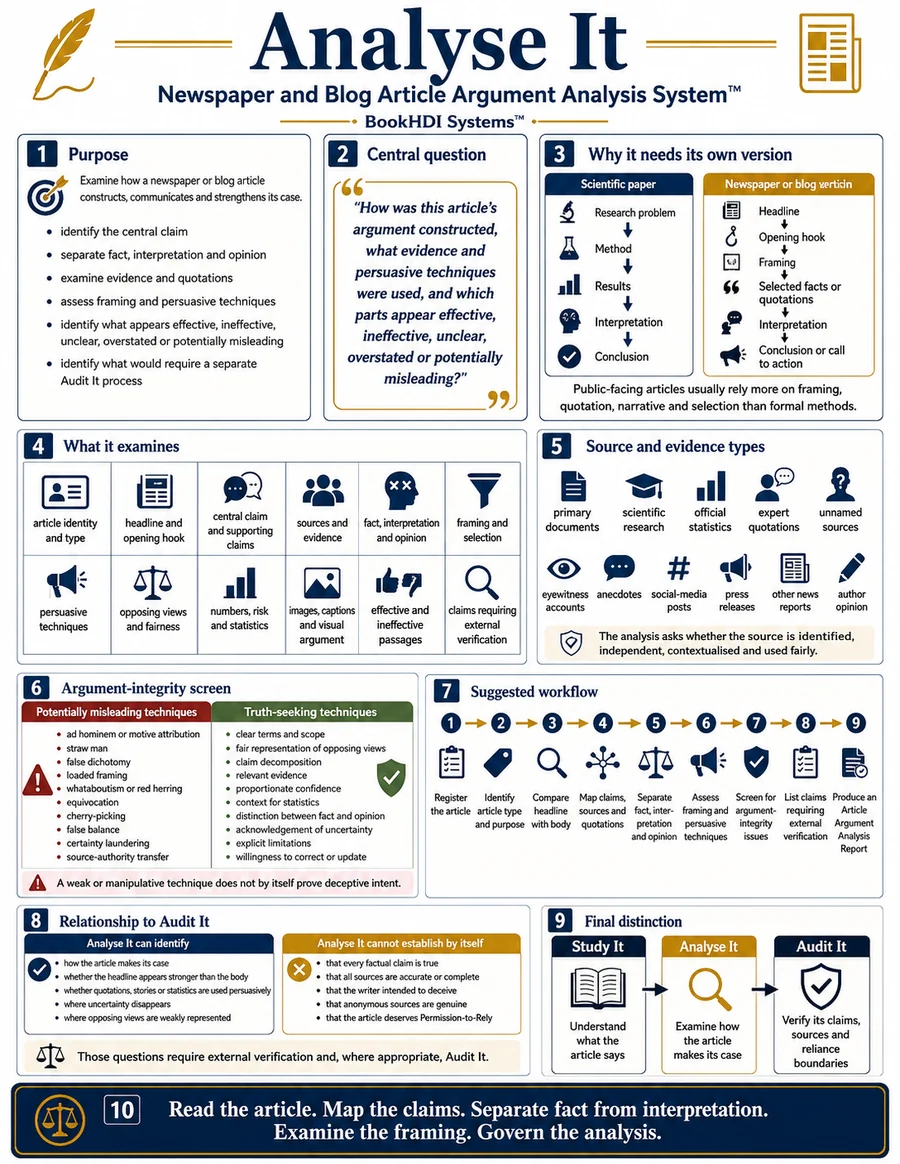
Separate fact, interpretation and opinion while examining headlines, sources, framing, statistics and opposing views.
Explore this system →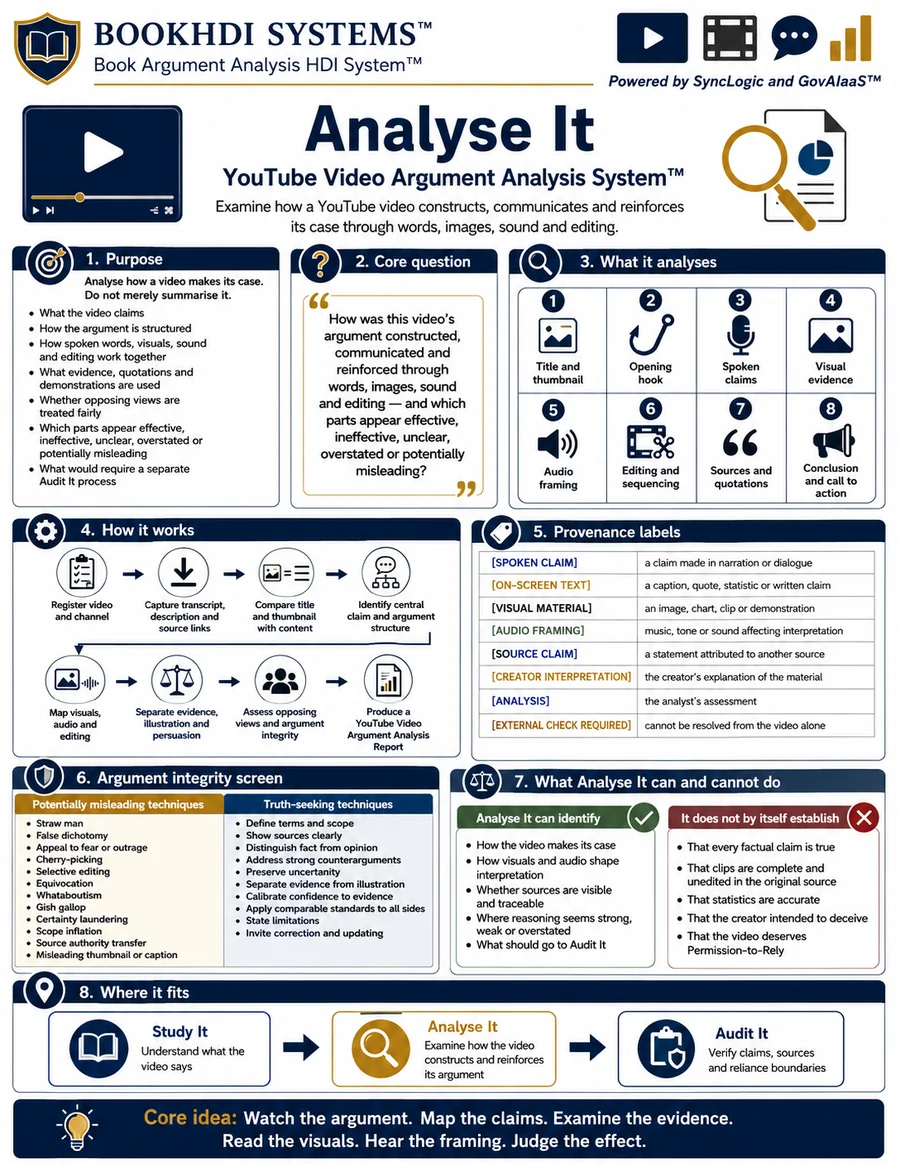
Examine how spoken claims, images, sound, editing, sources and sequencing work together to construct a case.
Explore this system →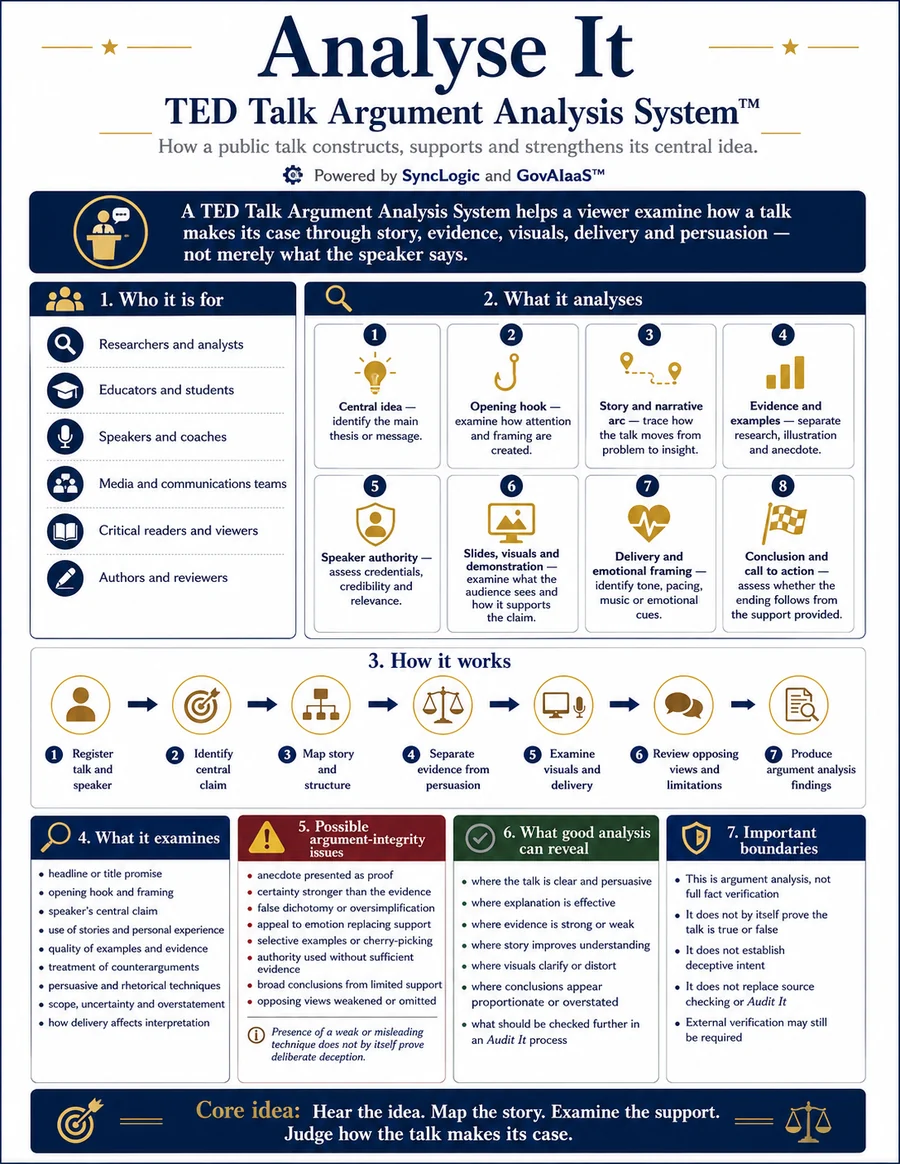
Map the central idea, story, evidence, delivery, visual support and transformation from experience to wider conclusion.
Explore this system →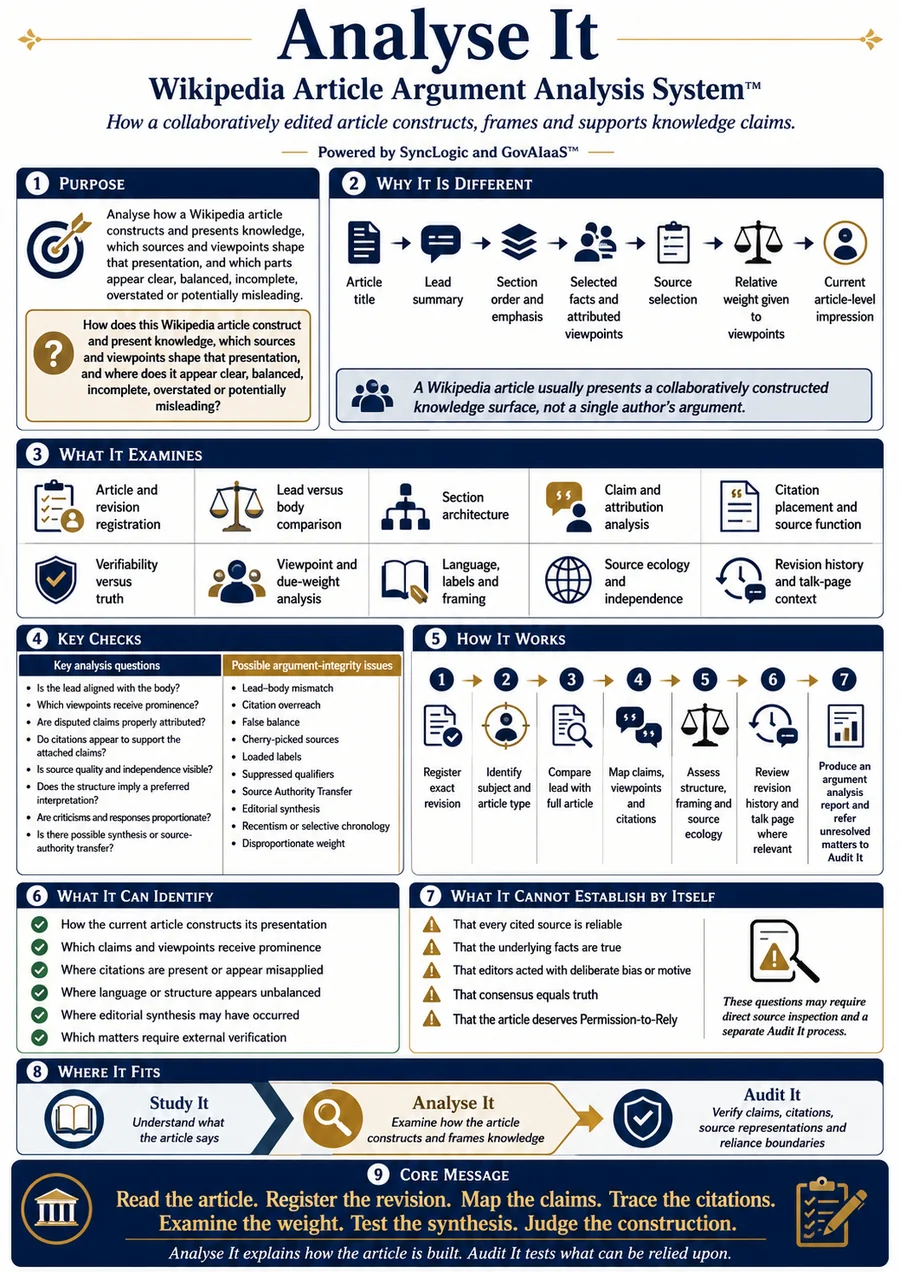
Register the exact revision, map claims and citations, compare lead with body and examine viewpoint weight and synthesis.
Explore this system →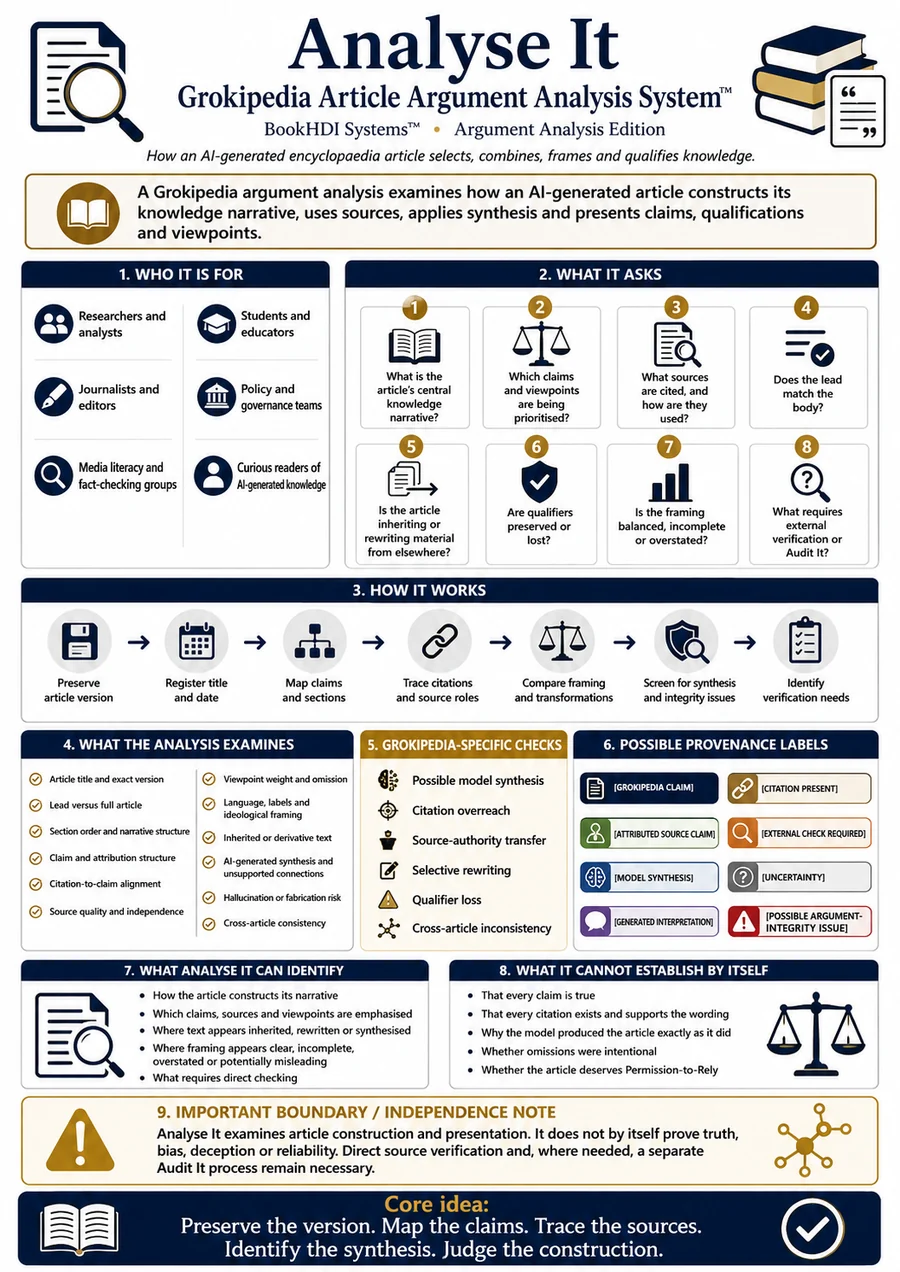
Preserve the version, trace sources, identify possible model synthesis and examine framing, qualifiers and transformations.
Explore this system →A transcript-only video analysis can miss visual and audio framing. A Wikipedia analysis without an exact revision can become unrepeatable. A scientific-paper analysis that ignores the results-to-conclusion junction can mistake interpretation for data.
The source type changes the evidence channels, the persuasive techniques and the verification risks.
Explore the launch packs